
How Plowing Damages Roads, and 3 Ways to Prevent It
Winter is hard on pavement all by itself. The way you plow can make it worse, on a state highway or in a shopping center parking lot. Three things you control decide how much damage the plow adds: speed, blade footprint and salt.
This guide explains how ice breaks up pavement and walks through all three, for public fleets and for contractors.
How ice damages pavement
Icy conditions form when freezing temperatures meet moisture on the surface. That moisture can come from frost, fog over a cold road, groundwater or melting snow, meltwater that refreezes, or freezing rain.
Ice is a safety problem first. Over 1,300 people are killed and more than 116,800 are injured each year in crashes on snowy, slushy or icy pavement, according to the Federal Highway Administration.
It’s also how potholes start. Water expands by about 9% when it freezes. When water seeps under the pavement and freezes, that expansion pushes the surface up. When it thaws, it leaves a gap, and traffic breaks the pavement down into it.

You can’t stop the weather, but you can make sure your plowing doesn’t add to the damage.
1) Plow speed
Speed changes how hard the blade hits everything it meets. Concrete and asphalt highways can handle plowing at up to 45 mph. On asphalt city streets, plow at about 10–15 mph, and on chip seal and gravel, slower generally means less damage. See 6 Unbreakable Rules for Snow Plow Driver Safety.
In parking lots
Parking lots are full of things a fast plow will hit, including curbs, islands, drains, speed bumps and light-pole bases. Plow lots at no more than about 15 mph, and slow down near those obstacles. Mark the hidden ones before the first storm. See 5 Best Practices for Dealing With Road Obstacles. Damage to a client’s property means a repair bill, and it can cost you the account.
2) Blade footprint
A blade’s footprint is how much of it touches the pavement. A wider footprint spreads the plow’s weight over more surface, so each part of the road takes less pressure and is less likely to peel or pothole.
Blades fall into two groups. An aggressive blade touches less of the road and cuts through ice and packed snow. A road-friendly blade has a wider footprint, so it wears longer and glides over manhole covers and bridge joints instead of catching them. Each works well when it’s matched to the job.
The angle of the blade matters too, because the wrong angle digs into the pavement. See What is a Snow Plow Attack Angle?
In parking lots
Parking lots have curbs, islands and drains in every direction, and many have fresh asphalt or sealcoat. A road-friendly edge that glides over obstacles is easier on that surface. Curb guards protect the curbs from the plow, and the plow from the curbs.
3) Salt
Salt keeps pavement clear, but it adds to the freeze-thaw problem. It lowers the temperature at which water freezes, though only so far: rock salt’s lowest practical pavement temperature is about 15°F, according to the Minnesota Pollution Control Agency. Meltwater from salt runs into cracks, then refreezes when the temperature drops overnight. That artificial freeze-thaw cycle repeats all winter.
The fix is to leave less moisture behind. Blades that scrape cleaner remove more snow, ice and water on the first pass. That breaks the cycle, and you need less salt to finish the job. How to Use Less Salt on Roads and Parking Lots shows how.
Better blades, fewer spring repairs
Low-bid blades wear fast, scrape less and leave more behind. That means more salt, more freeze-thaw and more patching in spring. A longer-lasting edge also lets drivers put the plow down sooner, instead of holding it up to save the blade.
For DOT and municipal fleets
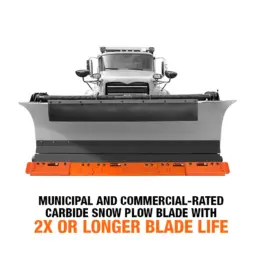
The Winter Carbide™ cutting edge systems are built to last. Each is rated against a standard tungsten carbide insert cutting edge:
- Razor® with Winter Carbide™A 2x WearFactor, or twice the wear life.View the system
- Razor® XL with Winter Carbide™A 3x WearFactor.View the system
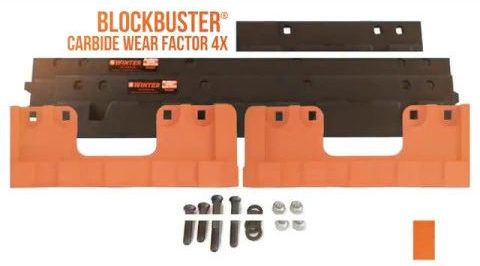
- BlockBuster® with Winter Carbide™A 4x WearFactor, built for heavy-duty routes.View the system
To protect curbs, add the Heavy-Duty Snow Plow CurbGuard, a curb guard built from 3/4″ thick steel.
For commercial contractors
Winter Carbide™ is built into contractor systems too:
- Vulcan® V-Plow Cutting Edge SystemFor BOSS, Fisher, Western and SnowEx V-plows. Its PlowGuards use Winter Carbide™, and it’s rated to last 3 times longer than factory steel blades.View the system
- MōDUS® Modular Skid Shoe System for Snow PushersFor Pro-Tech, Arctic and Metal Pless pushers. Its Winter Carbide™-filled wear pads are rated to last 5 times longer than OEM shoes and skids.View the system
Choose a blade company that acts as a partner, not just a vendor. A free consultation matches the blade to your routes or lots.
Frequently asked questions
How fast should I plow?
It depends on the surface. Concrete and asphalt highways can handle up to 45 mph. Plow asphalt city streets at about 10–15 mph. Keep parking lots to about 15 mph or less. On chip seal and gravel, slower is better.
Why do roads get potholes after winter?
Water seeps under the pavement, freezes and expands by about 9%. When it thaws, it leaves a gap, and traffic breaks the pavement down into it.
What’s the difference between aggressive and road-friendly blades?
Aggressive blades touch less of the road and cut through ice and packed snow. Road-friendly blades have a wider footprint that wears longer and glides over obstacles.
Related Products



Related Videos

Subscribe to our blog
"*" indicates required fields