
Why Torque Matters for Snow Plow Hardware
Many broken plow bolts and lost cutting edges don’t start with a bad part. They start with hardware that was too loose or too tight. Getting the torque right keeps edges in place, bolts in one piece and trucks on the road. This guide covers why torque matters, what goes wrong and how to keep hardware tight all season.
What torque is and why it matters
Torque is the twisting force that tightens a nut onto a bolt. It’s measured in pound-feet (lb-ft) or newton-meters (N·m). The right torque stretches the bolt just enough to clamp the cutting edge tight against the angle iron. That clamping force holds the parts together while still allowing for normal expansion and contraction. It matters for cutting edges, trip springs and every other bolted part on the plow.
Too loose vs. too tight
Too loose
Bolts work loose and the edge shifts. A loose edge wears unevenly, clears poorly and overloads nearby bolts until they shear. A cutting edge or guard can even fall off and leave debris in the road.
Too tight
Over-tightening stretches the bolt past its limit and leaves it brittle. The bolt can snap without warning under load, or its head can pop off, and the blade can crack early.
What goes wrong
- Broken bolts: Most start with too much movement from loose hardware, and they tend to break at the worst moment.
- Loose cutting edges: A shifting edge wears unevenly, clears less snow and puts extra load on nearby bolts.
- Early hardware wear: Small movements stretch bolt holes and damage threads, so parts need replacing sooner.
For more on reading a broken blade, see Why Is My Snow Plow Blade Broken? Causes and How to Prevent It.
Start with the right hardware
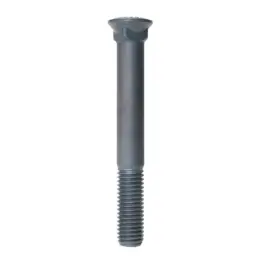
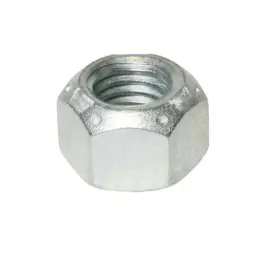
Use Grade 8 plow bolts with hardened lock nuts. Grade 8 bolts are stronger and less likely to fail in the field. Hardened lock nuts resist mushrooming and stay put through vibration and temperature swings. Shop Grade 8 hardware.
- Don’t use lock washers: they’re harder than the moldboard and blade, so they cut into the softer steel.
- Never weld a nut to a bolt, because welding heat ruins the bolt’s heat treatment.
- Don’t reuse lock nuts or their bolts: Stover lock nuts crimp the bolt threads as they tighten. That deforms the bolt, so neither can be reused safely.
- Guard against rust: in areas with heavy salt, stainless steel or coated fasteners help.
See It’s Risky Business to Use the Wrong Plow Bolt for more on choosing bolts.
Get the right torque spec
There’s no single torque value for every plow bolt. The right spec depends on the bolt’s size, grade, coating and thread treatment. Get it from the published SAE standards.
Best practices for torquing plow hardware
- Step 1: Prepare the work area: make sure you have room, good light and a second person to help.
- Step 2: Clean every surface: remove dirt, ice and rust from the threads and mating surfaces. Any grit left behind grinds away during plowing and leaves bolts under-torqued. Use only the lubricants your plow maker specifies.
- Step 3: Check the angle iron: if an old blade wore into it, the new edge has less surface to rest against. That puts more backward torque on the bolts.
- Step 4: Use a calibrated torque wrench: digital models are more accurate, and many beep at the target torque.
- Step 5: Mind the temperature: cold can make fasteners brittle, and heat can throw off torque readings. When you can, let the equipment reach normal temperature first.
Keep it tight all season
Fasteners lose tension as parts settle and temperatures swing. Re-check torque after the first 10 hours of use, then at regular intervals through the season. Recalibrate your torque wrench several times each winter.
If you use an impact wrench, check its output. Clamp an old blade section in a vise and run a bolt in with the impact wrench. Then measure the torque with your torque wrench, and adjust the impact wrench up or down to match.
Torque checklist
- Use Grade 8 bolts and hardened lock nuts, and never reuse the lock nuts or their bolts.
- Clean the threads and mating surfaces.
- Get the torque spec from the published SAE standards.
- Re-check torque after the first 10 hours of use.
- Recalibrate your torque wrench several times a season.
Frequently asked questions
Can I reuse plow bolts and lock nuts?
No. Stover lock nuts crimp the bolt threads as they tighten, which deforms the bolt. Neither the nut nor the bolt can be reused safely. Replace both each time you change the edge.
Where do I find the right torque spec?
Use the published SAE standards. The right value depends on the bolt’s size, grade and coating.
How often should I re-check torque?
After the first 10 hours of use, then at regular intervals through the season. Look for loose, bent or missing bolts after every storm.
Related Products
Related Videos

Subscribe to our blog
"*" indicates required fields